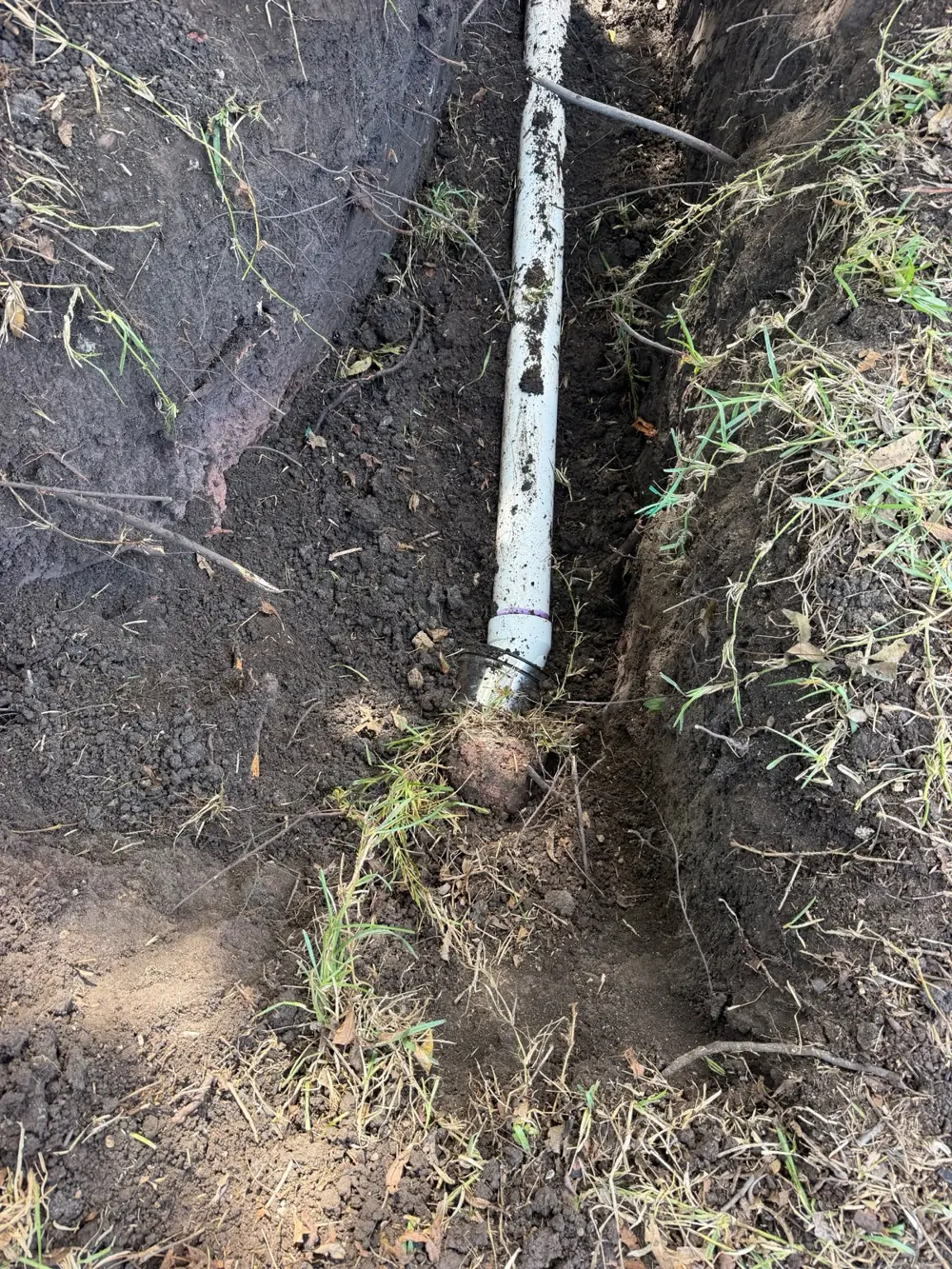
Sewage was backing up into a front yard and a drain machine couldn't clear it. Here is how we found the cause and replaced about 30 feet of original clay sewer pipe in a single day.
This November we replaced a failed sewer line at a San Antonio home built around 1950. The whole job, from the first scoop of dirt to a covered trench, took one day. Here is what happened, step by step, so you know what a sewer line replacement actually involves.
The Call: Sewage in the Yard
The homeowners called because their sewer line was clogged and sewage was coming up through the cleanout and flooding the yard. That told us the blockage was somewhere out in the yard, away from the house. When a line is blocked downstream, the lowest opening is where everything comes back out.
We started with the simplest fix and ran a sewer machine through the line. It could not clear the clog.
What the Camera Showed
When a machine can't get through, the next step is a sewer video inspection. The camera showed roots everywhere in the line. The pipe was clay, original to the house. Clay sewer pipe has not been installed in a very long time, and after roughly 75 years in the ground this one was done.
With roots throughout the pipe, clearing it again would only buy time. We have written before about dealing with tree roots in a sewer line, but when the pipe itself has failed, replacement is the lasting fix.
The Plan
We gave the homeowners an estimate to replace the sewer line from just outside the house to the connection near the sidewalk. They had already received a much higher quote from another company, so they were glad to have a second number. We pulled the permit and were back the next morning.
Who owns which part of the sewer line?
On this job, the homeowner's line ran from the house to a 6-inch connection just before the sidewalk. Past that connection, the pipe belongs to San Antonio Water System. That is why the replacement stopped where it did.
The Dig and the New Pipe
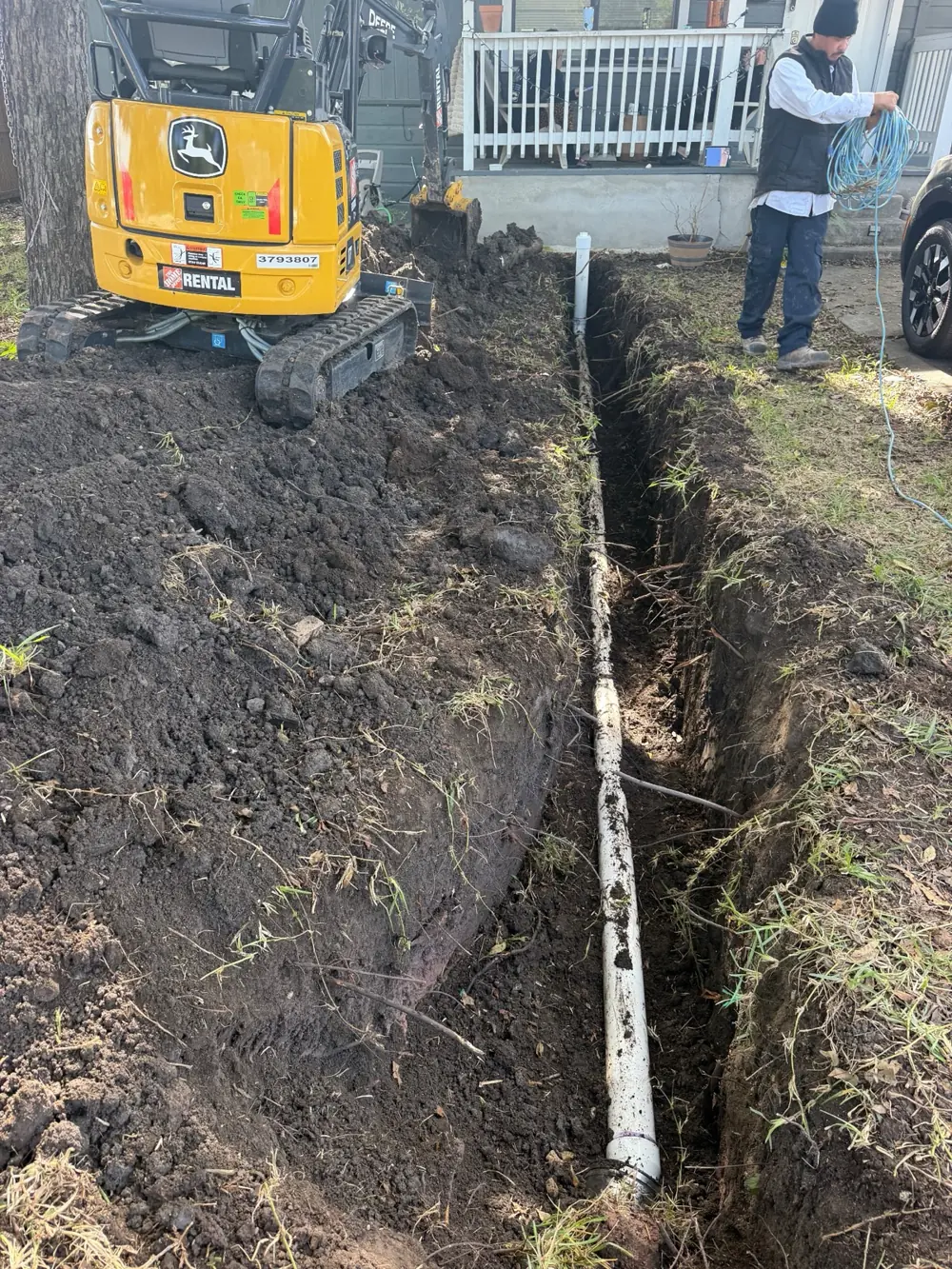
We brought in a mini excavator and started digging at the edge of the house, following the old pipe and breaking it out as we went. Because the line was still clogged, sewage filled the trench while we worked. It is messy, but it is part of the job, and we kept going until the entire old line was out.
- About 30 feet of new 4-inch Schedule 40 pipe across the yard
- A new two-way cleanout, so the line can be reached in both directions in the future
- A connection to the existing pipe where it leaves the house
- A connection to the 6-inch pipe just before the sidewalk
- A quarter inch of fall per foot along the whole run, which is plenty for proper drainage
Camera Check and City Inspection
Once the pipe was in, we ran the camera through the repair again to confirm everything looked right. We also checked the section past the property line, and it looked fine.
A City of San Antonio inspector then met us on site. He looked over the work and passed the inspection on the spot.
Backfilled the Same Day
As soon as the inspection passed, we backfilled the trench with the same soil that came out of it, using the excavator that was still on site, and cleaned up the yard as well as we could.
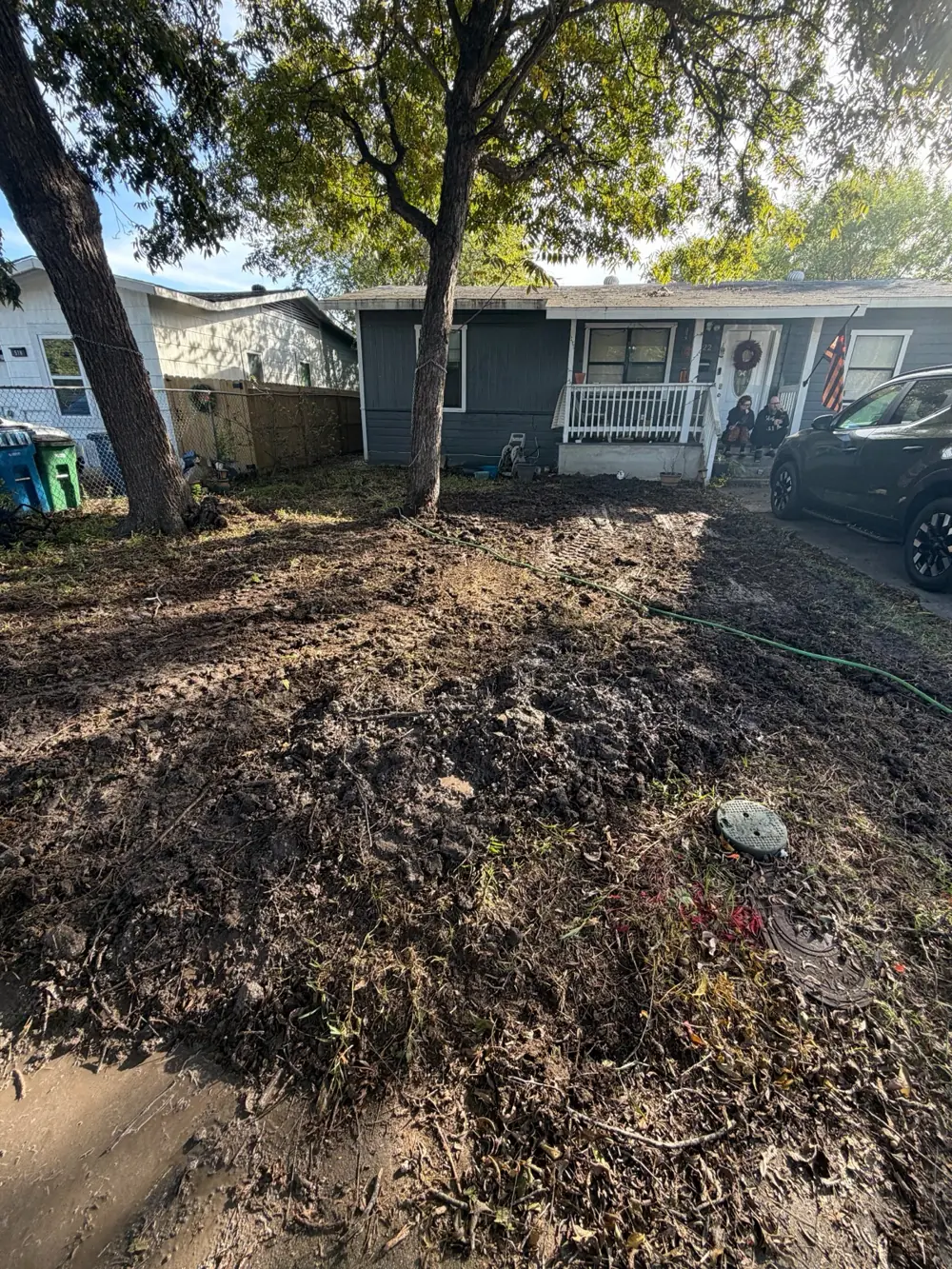
The homeowners had been worried about the trench sitting open for a day or two. That does happen on some jobs, and an open trench is a real hazard for people and pets. Here it was closed before we left.
Signs an Older Sewer Line Is Failing
This job followed a pattern we see in older San Antonio homes. It is worth having the line looked at with a camera if you notice any of these:
- Sewage or water coming up through the cleanout in your yard
- A clog that a drain machine cannot clear, or one that keeps coming back
- A home built in the 1950s or earlier that still has its original sewer pipe
- Large trees growing near the path of the sewer line
If any of that sounds familiar, our sewer repair team in San Antonio can inspect the line and tell you whether it needs clearing, a spot repair, or a full replacement.
Written by
Master Plumber - San Antonio, TX
I've spent more than 15 years in plumbing and worked for companies large and small before starting PlumbSmart. Along the way, I heard too many stories from homeowners who felt let down by poor service or unclear answers. I knew we could do better. As PlumbSmart's owner and a Texas-licensed Master Plumber, I work with our team to give customers straightforward advice and work they can rely on. I also enjoy helping homeowners understand what's going on with their plumbing so they can make the right call for their home.
All articles by Adam →